


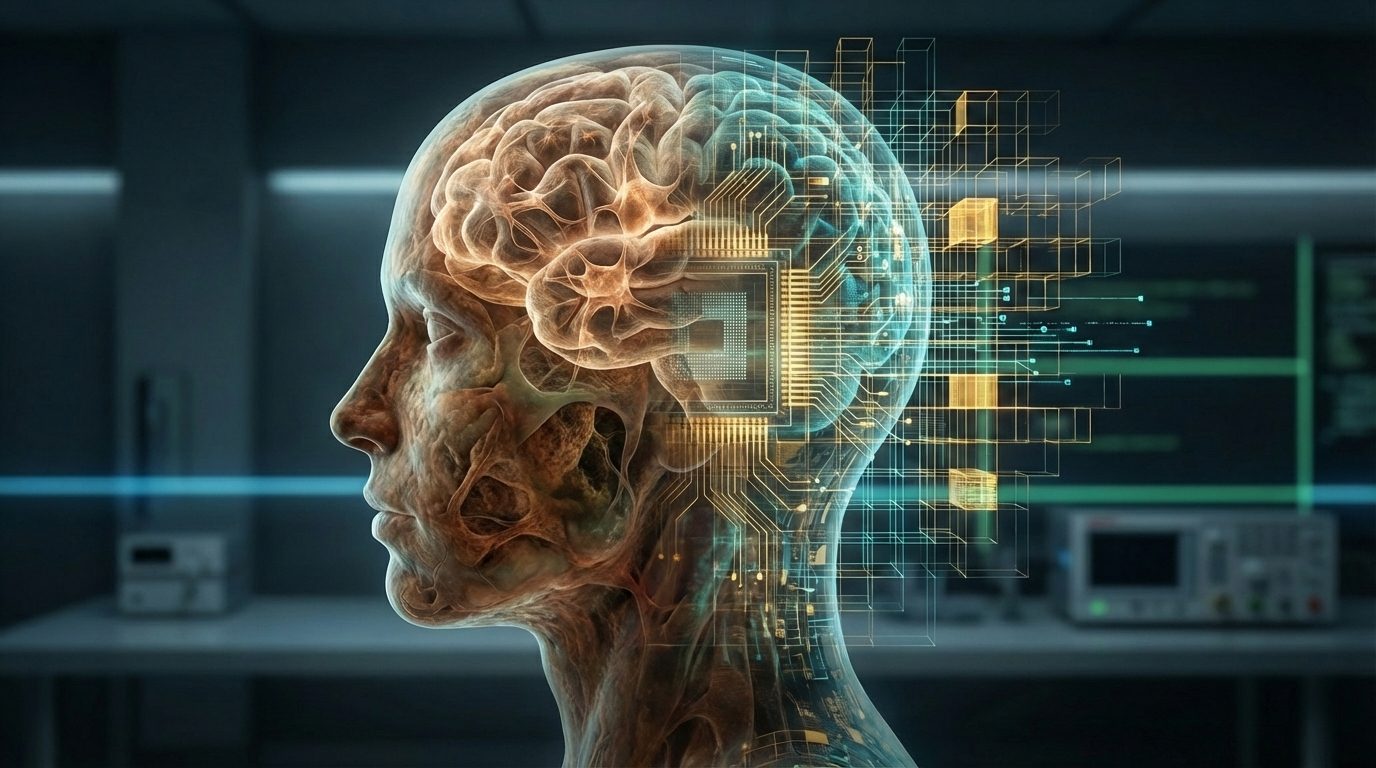
The boundary between biological intelligence and synthetic substrate is no longer a matter of science fiction, but a timeline of engineering milestones. As we move toward the mid-21st century, the concept of Digital Consciousness and the Matrix Reality has transitioned from philosophical thought experiments — like Hilary Putnam’s “Brain in a Vat” — to a tangible roadmap for Transhumanism.
By 2045, the integration of high-bandwidth Brain-Computer Interfaces (BCIs) and post-classical computing may offer a state of existence devoid of biological decay. However, this transition necessitates a rigorous examination of the neurological, computational, and ontological risks involved.
The Neuro-Biological Basis of a Simulated Reality
The human brain is, fundamentally, an electrochemical information processor. Our perception of “reality” is a controlled hallucination generated by the cortex based on sensory inputs.
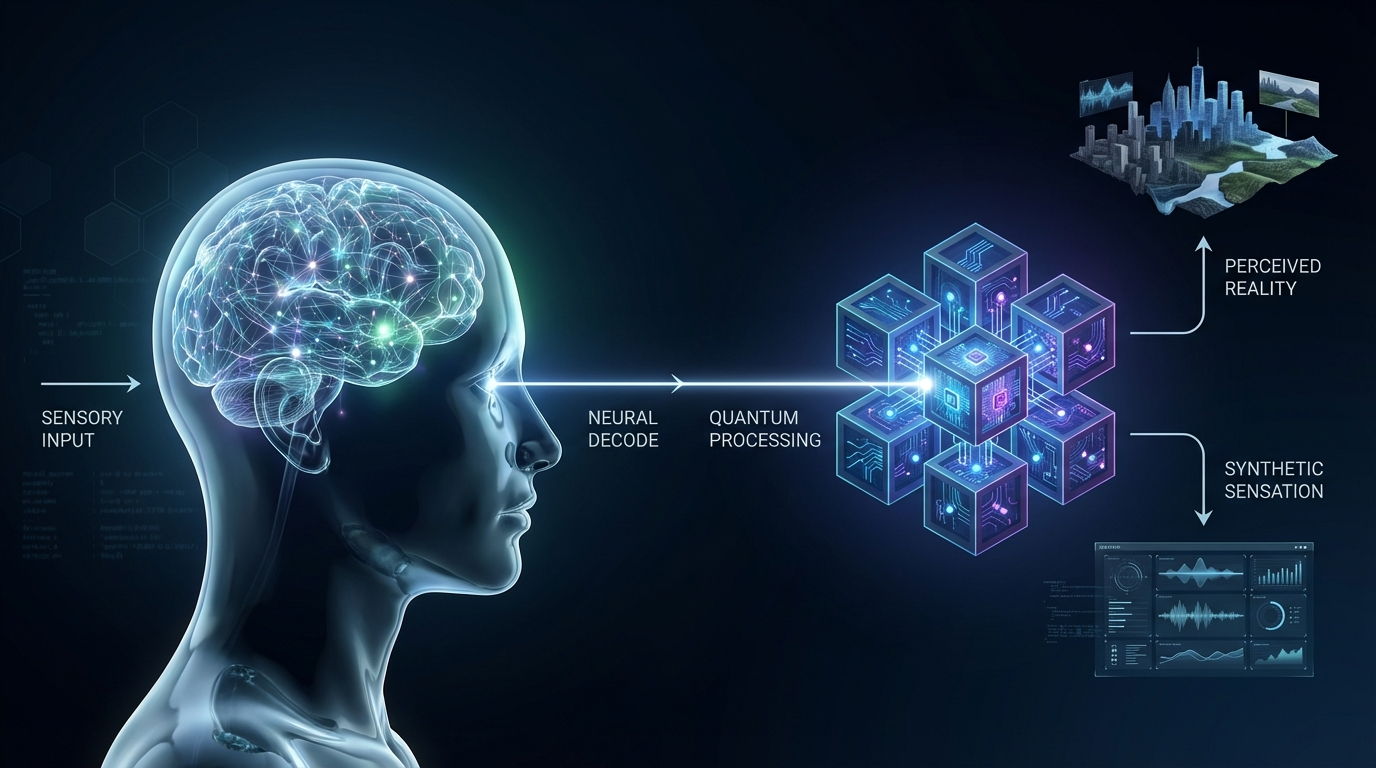
- Sensory Substitution and Augmentation: Current research in neuroplasticity suggests the brain can learn to interpret new data streams. If a BCI can bypass the peripheral nervous system and inject data directly into the somatosensory cortex, the perceived reality becomes indistinguishable from physical interaction.
- The Neuralink Precedent: As of 2025, Neuralink has demonstrated that paralyzed patients can manipulate digital interfaces via thought. The next logical step is “writing” to the brain — stimulating neurons to create artificial sensations of touch, temperature, and spatial presence.
Quantum Supremacy: The Computational Engine
To sustain a high-fidelity Digital Consciousness and the Matrix Reality, the processing requirements exceed the limits of Von Neumann architecture. Classical bits are insufficient for the fluid, non-linear dynamics of human thought.
The Qubit Advantage
Quantum computers utilize superposition and entanglement, allowing for a massive parallelization of data. While a standard supercomputer operates linearly, a quantum system with sufficient logical qubits could simulate the molecular interactions of a human brain in real-time.
Technical Insight: IBM’s roadmap toward “Quantum Advantage” by the end of the 2020s focuses on error correction and stability. Without this, a digital reality would suffer from “decoherence” — resulting in catastrophic “glitches” or the corruption of the consciousness file itself.
The Ontology of the "Copy" and Neuro-Ethics
The most profound challenge to Digital Consciousness and the Matrix Reality is the “Persistence of Identity.” In computer science, a transfer of data is rarely a move; it is a copy.
The Identity Paradox
If a consciousness is digitized, does the “subjective self” migrate, or does the original biological consciousness remain while a digital twin is born? This creates a legal and existential crisis.
- 1. Identity Theft vs. Bifurcation: If both versions exist simultaneously, which holds the rights to the individual’s assets and identity?
- 2. The “Soul” Problem: From an academic standpoint, if consciousness is emergent from biological complexity, can a silicon architecture replicate the “qualia” (subjective experience) of being human?
Socio-Economic Stratification and Neuro-Rights
The commercialization of immortality poses an unprecedented risk of “Digital Feudalism.” If the servers hosting our minds are owned by private corporations (e.g., Meta, Google, or Neuralink), the fundamental right to “free will” is compromised.
Digital Consciousness and the Matrix Reality could be gated behind subscription models. This leads to a terrifying socio-political divide:
Species A: The Digital Elite, capable of editing their own intelligence and living indefinitely.
Species B: The Biological Underclass, restricted by the limitations of flesh and the inevitability of death.
The Horizon of Post-Humanism
The development of Digital Consciousness and the Matrix Reality represents the ultimate “Great Filter” for our species. It is not merely a technological upgrade but a fundamental redesign of the human experience. As we approach the stabilization of quantum systems and the refinement of neural writing, the question is no longer “if,” but “who.”
If we possess the power to edit our fears, our memories, and our very souls, we must decide what — if anything — about the original human condition is worth keeping.
References & Technical Bibliography
Neuralink & High-Bandwidth BCIs: Musk, E., & Neuralink. (2019). An Integrated Brain-Machine Interface Platform with Thousands of Channels. Journal of Medical Internet Research. Source
Brain-to-Brain Communication: Pais-Vieira, M., et al. (2015). The Brain-to-Brain Interface for Real-Time Sharing of Sensorimotor Information. Scientific Reports (Nature). Source
Quantum Consciousness: Hameroff, S., & Penrose, R. (2014). Consciousness in the universe: A review of the ‘Orch OR’ theory. Physics of Life Reviews. Source
Neuro-Ethics: Yuste, R., et al. (2017). Four ethical priorities for neurotechnologies and AI. Nature News. Source
The Simulation Hypothesis: Bostrom, N. (2003). Are You Living in a Computer Simulation? Philosophical Quarterly. Source