


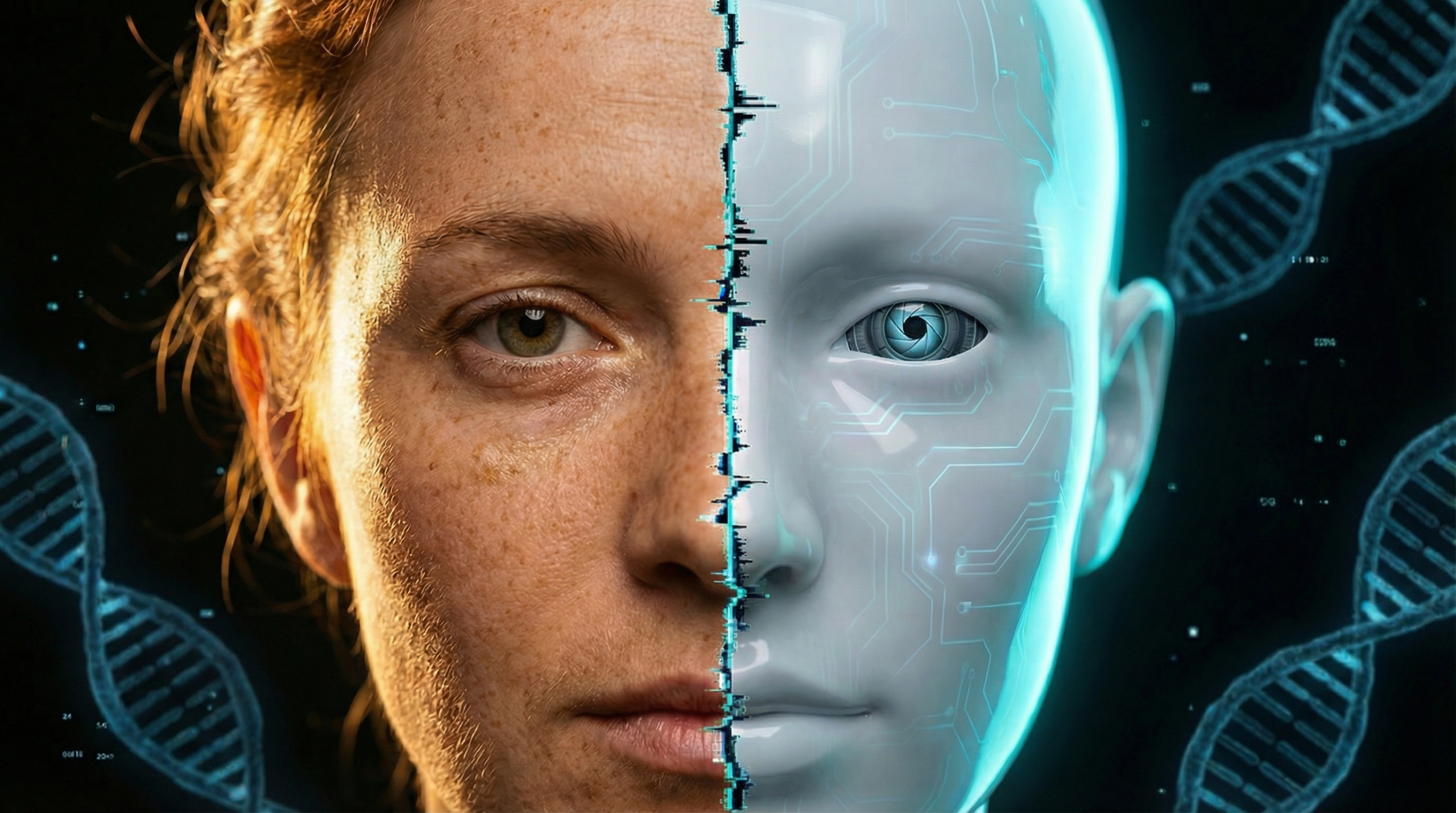
In 1997, the film Gattaca presented a chilling vision of a society where DNA dictated destiny — a world where the genetically “Valid” ruled, and the natural-born “In-Valids” were relegated to the margins. At the time, it was viewed as dystopian fiction. Today, it reads like a breaking news ticker.
We are standing on a precipice that few are willing to acknowledge: ours could be the last generation of humans born without any DNA editing. While we debate politics and economics, CRISPR technology has quietly handed us the pen to rewrite the human story.
This isn’t just about curing diseases; it is about the fundamental definition of what it means to be human. If our laws — specifically designed to stop genetic discrimination — are already obsolete, we might be sleepwalking into a biological caste system right under our noses.
From Reading to Rewriting: The Velocity of Change
The most terrifying aspect of the Gattaca comparison is that the movie was actually too optimistic. In that fictional universe, machines could only read DNA. Today, thanks to CRISPR-Cas9, we can rewrite it. Think of it as the “Control+Z” of biology.
The timeline of this transition has been blindingly fast, moving from science fiction to medical reality before regulators could blink.
2023: The FDA approved the first CRISPR-based therapy for sickle cell disease (Casgevy), a historic milestone for patients.
2024: Clinical trials for in vivo gene editing in the eye demonstrated visual improvements, proving we can restore sensory functions.
2025: A baby, who would have otherwise suffered from a rare genetic disease, was saved by a custom-made gene therapy tailored specifically for them.
This is no longer “the stuff of the future.” It is happening at this very moment.
The "Swiss Cheese" Protection: Why GINA Fails
In 2008, the United States passed the Genetic Information Nondiscrimination Act (GINA) to protect citizens from being penalized based on their DNA. However, GINA was drafted before the explosion of modern editing tools like CRISPR in 2012. Consequently, the law is full of holes.
If you think the law protects you from a Gattaca-style future, consider these massive loopholes:
1. The Insurance Gap
GINA does not cover life, disability, or long-term care insurance. Legally, an insurance provider could charge a “natural” human a fortune due to “bad” genes while offering significant discounts to an “enhanced” individual.
2. The “Natural” Pre-Existing Condition
The law protects healthy people who have genetic markers for future risk. But in a world where perfect health can be programmed, the simple fact of being “natural” — unedited — could eventually be viewed as a “pre-existing condition”. Those born the traditional way may soon be seen as technologically obsolete.
3. The “Positive” Discrimination Loophole
Perhaps the most insidious gap is that while the law prohibits using genetics against you, it doesn’t stop you from using genetics to your advantage. Imagine a job interview where a candidate places a verified genetic report on the table: 300% superior memory, immunity to 15 types of cancer, and optimized IQ. A recruiter cannot demand this report, but if faced with a choice between a standard human and a superhuman, the economic incentive to hire the “enhanced” candidate is overwhelming.
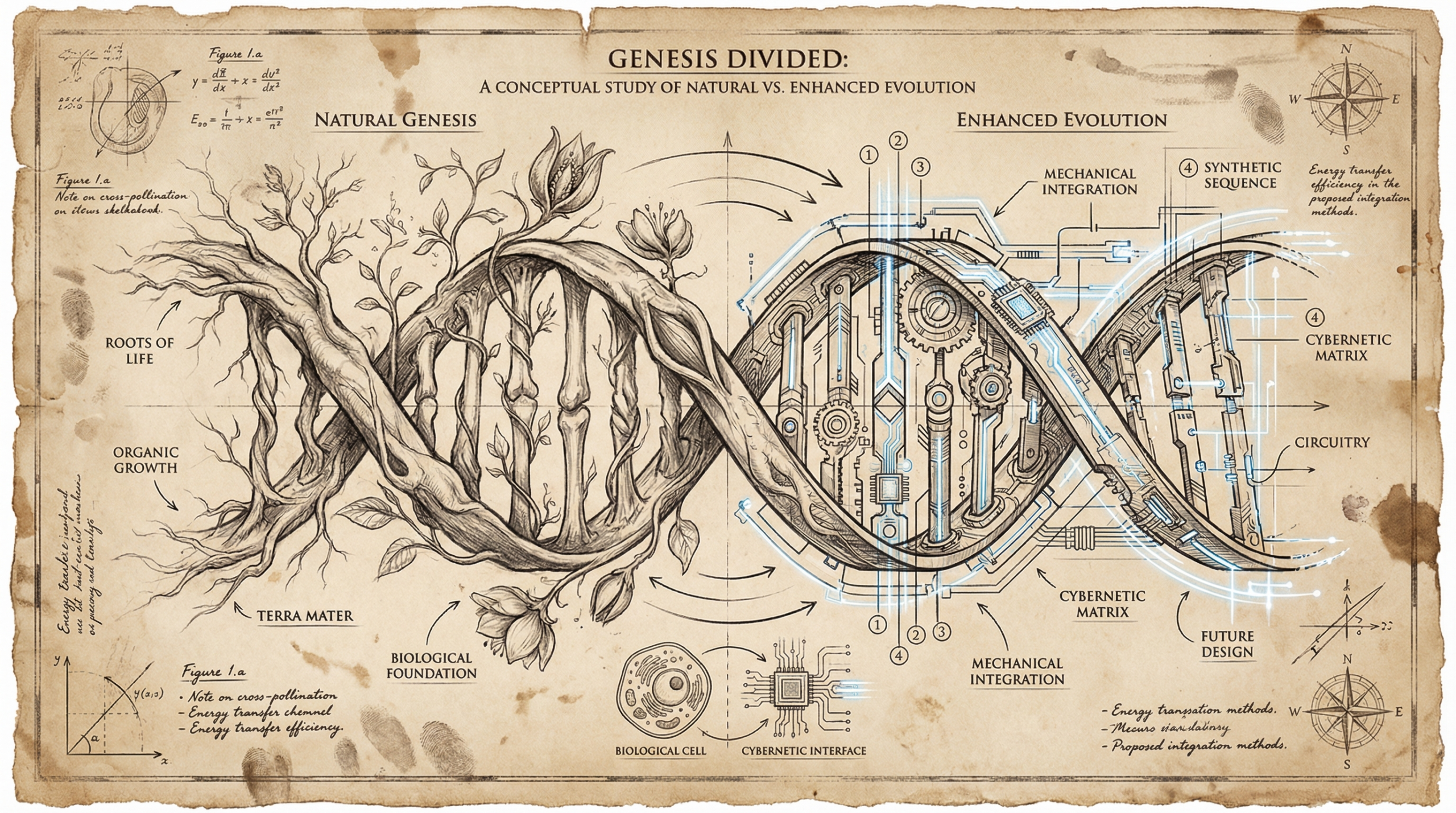
The Great Divergence: Naturals vs. Enhanced
Let’s run a thought experiment. Picture two groups of children born today. On one side, the Naturals: born without editing. On the other, the Enhanced: optimized for intelligence, strength, and longevity.
Fast-forward 20 years. In the classroom, an enhanced student solves calculus problems instantly, while the natural student struggles to grasp the concept. In the workplace, enhanced employees work tirelessly without fatigue or illness.
This is not discrimination based on race or socio-economic status; it is a division at the most fundamental biological level. Unlike other forms of inequality, this gap widens with every generation because the advantages are etched into the DNA itself.
“In a world where perfect health can be bought… those born the traditional way would be seen as… outdated.”
The Jerome Paradox: Is Perfection Empty?
Before we surrender to inevitable obsolescence, we must return to the lesson of Gattaca. The protagonist, Vincent (an “In-Valid”), succeeds not because of his genes, but because of his grit. Conversely, Jerome, the genetically perfect specimen, is consumed by his own perfection. He was born to be number one, and placing second destroyed him.
This raises a philosophical question: Does our search for perfection steal the very thing that makes us human?. Our limitations, our struggles, and our failures are often what force us to grow. A generation that never falls may never learn how to get back up. They might be efficient, but will they be empty?
Who Writes the Code?
We are standing at a unique point in history. The children being born today might be the last ones with DNA that hasn’t been edited by human hands. Their children — our grandchildren — could be the first intentionally designed species.
Vincent Freeman fought to escape a destiny written in his DNA. We, the likely last natural generation, are now holding the pen. We have the power to choose not just our own destiny, but the evolutionary trajectory of our entire species.
The question isn’t just “would you enhance yourself?” The real question is: What kind of humanity do we want to build?.
Would you choose to be the last of the naturals, or the first of the enhanced?
Sources & Further Reading
For those who want to dive deeper into the science and ethics discussed in this article, here are the primary sources and official reports:
1. The Medical Milestone (Sickle Cell Approval)
FDA Official Press Release (Dec 2023): FDA Approves First Gene Therapies to Treat Patients with Sickle Cell Disease.
Context: Confirms the approval of Casgevy, the first CRISPR-based gene editing therapy, marking the shift from theory to clinical reality.
2. The Legal Loopholes (GINA)
National Human Genome Research Institute: Genetic Discrimination and GINA.
Context: Detailed breakdown of the Genetic Information Nondiscrimination Act of 2008. It explicitly states that protections do not apply to life insurance, disability insurance, or long-term care insurance.
3. Vision Restoration Trials
The New England Journal of Medicine (2024): Gene Editing for CEP290-Associated Retinal Degeneration.
Context: Results from the “BRILLIANCE” clinical trial demonstrating safety and efficacy in using CRISPR technology to treat rare forms of blindness.
4. The “Gattaca” Debate (Bioethics)
Nature Biotechnology: Germline editing and the future of human evolution.
Context: Academic discussion on the ethical implications of “rewriting” human DNA and the potential for societal stratification.
For those who want to verify the data or explore the legal texts mentioned in this article, here are the direct links to the official reports and studies:
1. The Medical Milestone (FDA Approval)
Source: FDA Approves First Gene Therapies to Treat Patients with Sickle Cell Disease (Casgevy)
Context: The official FDA press release from December 2023 confirming the safety and approval of the first CRISPR-based therapy.
2. The Legal Loopholes (GINA Legislation)
Source: Genetic Information Nondiscrimination Act (GINA) Fact Sheet
Context: The National Human Genome Research Institute explicitly states that GINA protections do not apply to life, disability, or long-term care insurance.
3. Vision Restoration Trials (2024 Results)
Source: NIH: Participants of Pioneering CRISPR Gene Editing Trial See Vision Improve
Context: Summary of the New England Journal of Medicine (May 2024) paper regarding the BRILLIANCE trial, which showed visual improvements in patients with Leber Congenital Amaurosis.
4. The Ethical Debate (Germline Editing)
Source: The Ethics of Germline Gene Editing (NIH/PMC)
Context: A deep dive into the arguments regarding “rewriting” human embryos and the potential impact on future generations.